Posted on

Geoffrey Hill – Poetry Reading at the Sheldonian Theatre, Oxford

Announcing Geoffrey Hill’s forthcoming poetry reading event at the Sheldonian Theatre, Oxford.  Details are as follows:

GEOFFREY HILL: POETRY READING
AT THE SHELDONIAN

Poems from

FOR THE UNFALLEN (1959)

to

WITHOUT TITLE (2006)

7pm for 7.30-10.00pm     1st February 2006

Admission Free.    Sponsored byOUP

Copies of A Treatise of Civil Power by Geoffrey Hill, published by Clutag Press (2005), will be available for sale at the event.


[wpsc_products product_id=’630′] [wpsc_products product_id=’646′]

Posted on

John Fuller – The Solitary Life  (Clutag Press, 2005)

Announcing the forthcoming publication of The Solitary Life by John Fuller, available Summer/Fall 2005.

Limited edition of 300 copies.

24pp 170mm x 240mm  ISBN 0-9547275-1-7

A modern master of the sonnet form meditates on life and love, art and death, in a sequence of thirty-five sonnets, full of sombre depths and light discovering ‘The welcome shape of things as what they are’, inspired by the life at Vaucluse of Francesco Petrarch, in the seven-hundredth anniversary year of the great Italian poet’s birth.

[wpsc_products product_id=’642′]

Posted on

Seamus Heaney – A Shiver  (Clutag Press, 2005)

Published: Summer/Fall   

CONTENTS: nine new poems: ‘Hö’fn’, ‘Horace and the Thunder’, ‘Helmet’, ‘Testimony: The Ajax Incident’, ‘Testimony: Anahorish 1944’, ‘The Aerodrome’, ‘A Shiver’, ‘Out of Shot’, ‘The Tollund Man in Springtime’.

How Seamus Heaney has always held his ground, through thick and thin, is something of a miracle, like the preservation in a Danish peat-bog of the Tollund Man, now revisited in this collection (‘The Tollund Man in Springtime’) and given a clean bill of health. Here in A Shiver Heaney’s ground is reaffirmed, found and kept and a stance maintained, in lifelong love, though glaciers melt and Jupiter (after Horace, Odes I, 34) finds ground zero: ‘Anything can happen, the tallest things / Be overturned, those high places daunted, / Those overlooked regarded.’

These subtle and quietly allusive poems speak the violence of the new world order in a world itself in peril of oblivion as the polar ice-caps melt. There is sufficient blood and gore here to send a shiver down your spine, from a scene in a slaughter house, to Ajax rampaging (do not seek to identify him). In the title poem a shiver is sent up the shaft of a sledge-hammer, in a paradoxical celebration of creative power, ‘witholdable at will’, capable of making ‘air of a wall’. Martial code words infiltrate these poems, like shields in a ‘testudo’, or cleaved to the helmet of an Irish-American fireman-poet called BREEN. The Americans are on the march too, though at a discreet distance, in 1944, bound for Normandy. The nine powerful (and power-full) poems that constitute A Shiver signal the onset of a new campaign, as Heaney in age, enters the fray again.

24pp 170mm x 240mm  ISBN 0-9547275-4-1

[wpsc_products product_id=’639′]

Posted on

Geoffrey Hill – A Treatise of Civil Power (Clutag Press, 2005)

PUBLICATION DATE 4th February 2005 

48pp 170mm x 240mm     ISBN 0-9547275-3-3

A major gathering of new work by one of the great poets, nowhere else published nor imminent in other forthcoming collections by Hill (January 2005, January 2006), comprising: ‘ON READING Milton and the English Revolution’ (12 x six-line stanzas); ‘To the Lord Protector Cromwell’ (x4 sonnets); ‘A Treatise of Civil Power’ (42 x eight-line stanzas); ‘Coda’ (8 x eight-line stanzas); ‘ON READING Burke on Empire, Liberty, and Reform’ (4 x seven-line stanzas); ‘ON READING Blake: Prophet Against Empire’ (45 lines in ten irregular stanzas); ‘ON READING Hazlitt: Lectures on the English Comic Writers’ (4 x six line stanzas); and ‘A Cloud in Aquila’ (6 x four line stanzas).

In his own words Geoffrey Hill has become a very different kind of poet from the one his first readers encountered almost half a century ago. At any rate, we have to acknowledge a dramatic sea-change in productivity. But plus ça change is a reliable coinage in the assaying of poetry. This is true however new-minted or made-new the voice (‘I’ll / give them lyric voice’), however dazzling the belated largesse. Here in these new poems are the familiar preoccupations with the good old cause: of language and authority; conscience and power; commerce and society (let’s add, to underline the point); history and memory; poetry and integrity; poetry and music; poetry and the ‘etymology of the gutter’; and poetry as atonement, not the least, by which Hill has always held himself and his readers to account. In the fluency or liquidity of this late work, the ‘endless wrangle / between truth and metre’ spawns ruminations of mesmerising range in which the orchestration of inspired obliquities or ‘ceaseless allusion’, shot through with dark humour, reaches such a pitch of mastery that one has to say, late or early, Hill has never written better. Watching in the wings are several writers to whom Hill nods in gratitude, not just Milton and ‘my god’ Ben Jonson, or Robert Herrick, or William Blake, as might not surprise us, but also Robert Lowell, and perhaps most interesting of all to see acknowledged John Berryman, whose Dream Songs are surely a ghostly presence here.

It would be fitting to speak of Hill’s recent return to Milton (for example, via ‘Comus’), if he had ever left him. Many will not know, and so it is worth pointing out, that the title poem of this new gathering ‘A Treatise of Civil Power’ derives from a Miltonic pamphlet of 1659 noted for a plainness of style unusual in Milton’s prose. As Milton figures here, so too does Cromwell, addressed in four sonnets whose chronological range brings us, as elsewhere in this collection, to the topical, to the Ireland of Veronica Guerin, ‘Dublin drug-heads / and Drogheda’. Those readers especially devoted to Hill’s midland kingdom, as celebrated in Mercian Hymns and revisited most recently in Orchards of Syon, will find here that same poet, who ‘had a calling for England’, his kite ‘in the myriad-snagged / crabapple crown, the cane cross-piece flailing; / a dark wind visible even deep in the hedge’ and register with delight the deployment of ‘crown’ and ‘cross-piece’ and know their weight and perhaps recall, to come round full circle, Milton’s ‘darkness visible’ in Paradise Lost.

For more regarding Geoffrey Hill:

Geoffrey Hill Study Centre

[wpsc_products product_id=’630′]

Posted on

TLS Review, 19th November 2004

John McNeillie

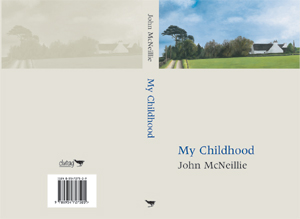
My Childhood

pp148. Thame: Clutag. £20.

0954727509

John McNeillie is better known as Ian Niall, under which pen name he became a major figure in British nature writing of the twentieth century. A Scotsman who ended up living in North Wales, McNeillie wrote more than forty books, mostly on rural themes. He was, notes his son (the poet Andrew McNeillie) in the introduction to My Childhood, “a kind of lyric poet in prose, and an elegist who had known Eden”. That Eden was North Clutag Farm, a remote steading in Wigtownshire in the Scottish borders, where McNeillie grew up under the care of his grandparents in the late 1910s and 20s. It is these years that are the subject of My Childhood – a previously unpublished work, and a minor masterpiece of rural memoir.

Continue reading TLS Review, 19th November 2004

Posted on

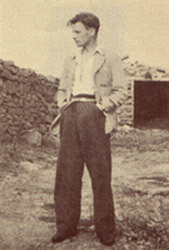
John McNeillie 1916-2002

The Scottish writer John McNeillie, who died on 24 June 2002, aged 85, left a legacy of over forty books, among them a number of minor classics, and several decades of weekly nature journalism in the pages of the dentists’ favourite sedative, Country Life for which he wrote under the pen name Ian Niall. Not only did McNeillie possess the eye and ear of a poet, he could also tell a spell-binding story.

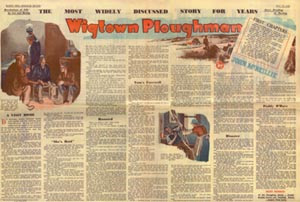
If the natural history essay was his true métier, as found in such volumes as The Poacher’s Handbook (1950), Trout from the Hills (1961), and his memoir A Galloway Childhood (1967), as well as several other collections, dramatic realist fictions also featured in his output and were where he first made his mark. John McNeillie’s first book, Wigtown Ploughman: Part of His Life, was published by the London firm of Putnam &Co, in March 1939. Its author was then twenty-two. Serialised in Glasgow’s Sunday Mail, the book caused a furore with its account of the impoverished lives and of what was seen as the ‘immorality’ of the cotters in the Machars of Wigtownshire. The book (in print in Scotland today and essential reading for all Gallovidians) played a key part in the instigation of housing reforms in the region. Hugh Walpole, writing in the Daily Sketch, though disturbed by its violence none the less found Wigtown Ploughman ‘shot through with beauty’ and praised and envied its authenticity. Other reviewers noted this quality, and some saw it as ‘equally authentic’ with the work of Lewis Grassic Gibbon, who had died in 1935.

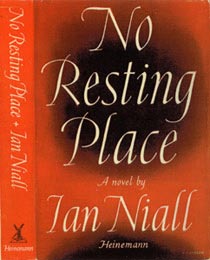
McNeillie’s controversial debut was followed by Glasgow Keelie, April 1940, a story of young hooligans in Glasgow in which Hollywood and the gangster movie play a vital role. McNeillie had a cinematic eye and ear and this book was a film just waiting (in this case, in vain) to me made. A second agricultural novel Morryharn Farm, followed in January 1941. But by now the war gave the world other things to think about. McNeillie spent the duration working in a precision tool engineering works in North Wales and there he would settle to live for more than forty years, finding Wales and the Welsh people deeply congenial. A fourth novel No Resting Place proved too violent in its telling for Putnam, but it was seized on eagerly by Heinemann and appeared in 1948, as a first novel by Ian Niall. McNeillie’s second debut proved no less remarkable than his first. Set in southwest Scotland, though the location isn’t precisely disclosed, No Resting Place relates the fortunes, feuds and misfortunes of the Kyle family, a tribe of ‘tinkers’.

McNeillie’s controversial debut was followed by Glasgow Keelie, April 1940, a story of young hooligans in Glasgow in which Hollywood and the gangster movie play a vital role. McNeillie had a cinematic eye and ear and this book was a film just waiting (in this case, in vain) to me made. A second agricultural novel Morryharn Farm, followed in January 1941. But by now the war gave the world other things to think about. McNeillie spent the duration working in a precision tool engineering works in North Wales and there he would settle to live for more than forty years, finding Wales and the Welsh people deeply congenial. A fourth novel No Resting Place proved too violent in its telling for Putnam, but it was seized on eagerly by Heinemann and appeared in 1948, as a first novel by Ian Niall. McNeillie’s second debut proved no less remarkable than his first. Set in southwest Scotland, though the location isn’t precisely disclosed, No Resting Place relates the fortunes, feuds and misfortunes of the Kyle family, a tribe of ‘tinkers’.

The documentarist Paul Rotha took the book up and filmed a treatment of it, in Co. Wicklow, with Michael Gough in the key role and a cast of Abbey Players, including Jack MacGowran, Noel Purcell, Eithne Dunne, Maureen O’Sullivan, and Diana Campbell in support. The film, released in 1952, is a classic of Irish cinema. A smattering of Irish was interpolated into the script, which otherwise draws much of its dialogue verbatim from the novel itself. It was shot on location around Enniskerry village, Glencullan and Kiltiernan, and went from Wicklow to the Venice film festival. There it took the attention of among others Winston Churchill, who, patriotically perhaps, told the Daily Mail it was his favourite movie at the festival that year. The film fell a casualty to what Rotha would lament as the politics of the British film industry and never enjoyed general distribution. A showing, in May 2001, at the Irish Film Centre in Temple Bar, Dublin, drew a considerable audience, among them representatives of traveller communities, for whom the film gives the first ever unsentimental cinematic account of their way of life, told from their side of the story.

There was a strongly reclusive and self-effacing element in John McNeillie’s character and the acquisition of a pen-name came to suit him well. He can scarcely be said ever to have made much attempt to promote himself or his work. During the 1950s and 1960s he wrote not only for Country Life but also at the same time contributed to the Spectator. In this period he also edited for IPC magazines the fishing monthly Angling, all from a small semi-detached house off the Abergele Road in Old Colwyn while holding down a full-time job at the Ratcliffe Tool Company. He was a passionate fly fisherman.

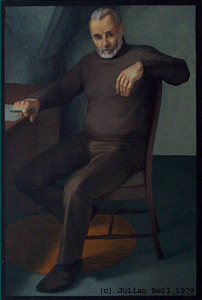
Born in Old Kilpatrick, Dalmuir, on 7 November 1916, John Kincaid McNeillie was the eldest son of Robert McNeillie and of Jean McDougall. Robert McNeillie, a blacksmith’s son from Garlieston in Wigtownshire, was then an apprentice engine fitter working on Clydeside for the firm of Beardsmore. His wife Jean was a daughter of John McDougall, a steward with the Cunard line and of a Gaelic-speaking mother, Ellen Munro. (She was an aunt of Neil Munro, the Glasgow journalist and author of The Lost Pibroch and of the ‘Para Handy’ stories, as recently retold for television.) At some point, when he was a little short of three years old, during an outbreak in Glasgow of menigitis, in which his younger sister fell a fatal victim, the infant McNeillie was despatched to Galloway to be cared for by his paternal grandparents John and Elizabeth McNeillie, then tenants of the Vans Agnew family of Barnbarroch, at North Clutag farm. It was in this horse-drawn time-warp, closer to the world of Robert Burns both in speech and custom than to the twentieth-century, that McNeillie spent a profoundly affecting part of his childhood. It was a world and time he would never escape, an Eden that formed the backdrop to almost all he wrote, and almost all he cared dearly to talk about. John McNeillie was made a Doctor of Letters by Glasgow University, for his contribution to Scottish literature, in 1998. He leaves a wife, Sheila, and a daughter and two sons. There is a portrait of him by the painter Julian Bell, in the family’s possession.

Since his death he has been honoured by the naming of the John McNeillie Library in the former county buildings at Wigtown, on which same square may be found The Wigtown Ploughman Hotel; and by the inauguration, as part of the Wigtown Literary Festival, of the Annual John McNeillie Lecture.

For further information, see the links below:

Comments regarding John McNeillie’s work

A Note on John McNeillie’s First Publisher

Note On Previous Dust-Jackets And Illustrator


© Andrew McNeillie 2004

Posted on

A Note on John McNeillie’s First Publisher

Putnam & Co

John McNeillie’s first publisher was PUTNAM & CO of London and New York. The man who discovered Wigtown Ploughman: Part of his Life and its young author was Boston-born and Harvard-educated, Constant Huntington (1876-1962). Huntington had joined Putnam (New York) in 1902 and three years later was despatched to run their London office.

As his obituarist put it in The Times in 1962, he was ‘a soldierly-looking, strikingly handsome man, patrician in taste, radical in outlook’. He was one of the very last individualist publishers and under his control Putnam almost certainly never published a book he hadn’t read and with which he didn’t personally deal in every detail.

It’s not exactly clear when John McNeillie’s book was typed up from manuscript and sent to Putnam. But it is highly probable, judging from dates in the manuscript, that it was ready by the end of the summer of 1937 (at which date he was twenty-one). Huntington took great pains to direct and promote his young author, to widen his horizons and introduce him to the great world. But McNeillie would never be anyone’s man, for better or worse. Besides which the war intervened to disrupt the world. The break with Putnam came with McNeillie’s fourth book, No Resting Place (1948). Huntington suggested revisions and these were resisted. Thereafter John McNeillie became Ian Niall and William Heinemann his publisher, while No Resting Place (billed as Ian Niall’s first book) went on to be filmed by Paul Rotha and to be taken up in America by Knopf.

Posted on

A Note On Previous Dust-Jackets And Illustrators

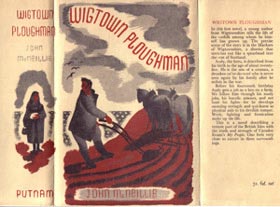
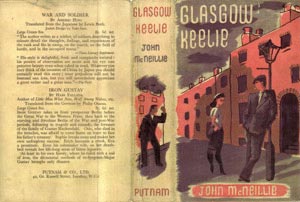
The dust-jacket illustrations for John McNeillie’sfirst three books: Wigtown Ploughman: Part of his Life (Putnam, 1939), Glasgow Keelie (Putnam, 1940) and Morryharn Farm (Putnam, 1941) were all painted by Robert Vere ‘Robin’ Darwin (1910-1974), a landscape and portrait painter who became principal of the Royal College of Art in 1948. He was a great-grandson of Charles Darwin.


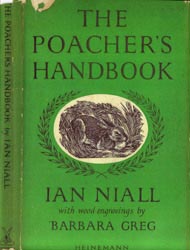
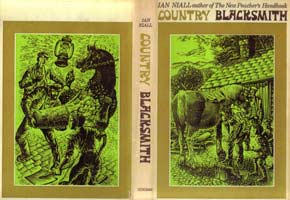
The woodcuts that illustrate A Poacher’s Handbook (Heinemann, 1950), Fresh Woods (Heinemann, 1951) and Pastures New (Heinemann, 1952) and provide the dust-jacket illustrations for those books, were by Barbara Greg (1900-1983) who studied wood-engraving under W. T. Smith at the Slade School c.1919-1920. She subsequently married fellow-student Norman Janes (1892-1980), himself a gifted book illustrator. Charles F. Tunnicliffe (1901-1979) who illustrated A Galloway Childhood (Heinemann, 1967) studied at the Royal College of Art. John McNeillie’s life of his friend Portrait of a Country Artist: C. F. Tunnicliffe RA was published, as by Ian Niall, by Gollancz in 1980. The Welsh illustrator E. Meirion Roberts(1913-2000), with whom John McNeillie enjoyed very close friendship (they were both devoted fly-fishermen), illustrated The Country Blacksmith (Heinemann, 1966).


Posted on

Some Comments On And Concerning John McNeillie’s Work

‘The Poacher’s Handbook is a classic essay in one of the major sub-genres in English Literature, the naturalist’s diary or handbook. Since Walton’s The Compleat Angler, it has been a form that breaks down solemn distinctions between serious and entertaining writing… As for writerly skills they are present in every paragraph: the line of every sentence is let out to the right length and tension. These are the skills, maybe, more associated with the good poet than the prose narrator…

No writing, whatever its subject and however unportentous its air, can be excellent without an ethical sense. Here this is lightly carried but Ian Niall is a writer you trust from the first. This is part of the reason why you don’t remain satisfied with half a dozen readings of this Poacher’s Handbook but will want to move on to his other books: to the marvellous memoir, A Galloway Childhood, the confessions of an addicted fly-fisherman, Trout from the Hills, or the philosopher ornithologist in Feathered Friends.

We cannot say where critical posterity will place these finely tuned books. It may be that it will find more humanity and truth in them than in the currently most celebrated fiction. What we can say is that The Poacher’s Handbook is a classic contribution to a tradition of secure masterpieces in the history of English, and that there are not many contemporary works that we can place with such confidence.’

from the introduction to The Poacher’s Handbook (1950; White Lion Books, 1992) by Bernard O’Donoghue, Fellow of Wadham College, Oxford

‘..if you start this book expecting to find a kind of ruthless Papageno you will be disappointed; the birdcatcher’s methods, indeed, are said to be “much more brutal than the blunderbuss”. What you get is something more like the elegiac Yeats of “The Wild Swans at Coole”. Niall ponders the crowding seashore wigeon: “Where were they before they began to gather in the estuary in October? Where did they nest and how did they come? Where will they go when they take their leave in late February or March?” Where indeed! Yeats’s famous ubi sunt inevitably comes to mind….What his [Niall’s] elegy is largely about is the passing of the world in which [the fowler’s] skills could be effectively plied. “Nowhere in Britain remains remote,” he laments; the essential solitude of the fowler has gone. And, if for much of the time the geese themselves are the heroes of this book (their passing overhead is celebrated again and again, at one point causing old men to “look up as though assured of eternal life”), they have to divide the writer’s admiration with the dedicated, friendless one-armed fowler of the last chapter…’

from the introduction to A Fowler’s World (1968; White Lion Books, 1994) by Bernard O’Donoghue

‘…Mr McNeillie knows the peasants of Wigtownshire at first hand, writes without sentiment, and follows no literary fashion. His writing is plain and good.’

Frank Swinnerton, Observer, 19 March 1939

‘Exaggeration? I hardly think so. It is just that Mr McNeillie is not afraid of the truth, however unpalatable it may be. These primitive folk live in a world of their own, and here you see it faithfully mirrored. It is a first novel of no little power and distinction.’

Ralph Straus, Sunday Times, 16 April 1939

‘Or take a first novel like “Wigtown Ploughman”, by John McNeillie. Here is a difficult book. It is coarse and violent and crude. There are more flights in it than I can count, and the young author, in a kind of glorious boastfulness revels in the details of drunkenness and lechery. And yet it is as authentic, honest a kind of thing as I have met for a long day and it is shot through with beauty. I myself would give a very great deal to have that same authenticity.

But it is a thing that no writer can obtain by prayer, and that no writers bred up in towns, as I was, can ever acquire. The book reminds me in many ways of D. H. Lawrence’s first novel “The White Peacock”, although Mr McNeillie is Mr McNeillie. I doubt if this will ever be a “sixpenny”. How then are we going to keep it alive?’

Hugh Walpole, Daily Sketch, 22 April 1939

STORY CREATES SENSATION

‘A controversy which swept the South of Scotland a few years ago has been given fresh impetus by the publication of a sensational exposure of the life of agricultural workers in Wigtownshire.

Following recent strictures by the Rev. A. J. R. Shearer…[etc etc]’

from the Glasgow Sunday Mail, 16 April 1939

‘Does the book “Wigtown Ploughman” exaggerate the conditions in Wigtownshire? Is immorality in the County confined to one parish? These are the questions that are causing a sharp division of opinion in Galloway. The controversy is most fierce in the Portpatrick district, but immorality is not confined to Portpatrick parish, as official figures unfortunately show…. “Wigtown Ploughman” will cause a furore among the farming communities. Already farmers are taking sides in the controversy. The local papers have become the centres for letters; others have taken up the cudgels in the “Sunday Mail”…..

from the Glasgow Sunday Mail, 23 April 1939

‘“Wigtown Ploughman”, the first instalment of which appeared in last week’s “Sunday Mail”, has added fuel to the fiery controversy that is sweeping Galloway on the question of immorality. But moves are already afoot to remove some of the conditions that are being criticised.
Bad housing has been blamed as the root cause of immorality in Wigtownshire. Rev. A. J. R. Shearer says the conditions are such as to make morality, if not impossible, at least very difficult.

Now an early meeting of the County Commitee will be held to investigate the whole position of housing. The question of housing figures largely in “Wigtown Ploughman”, and it is significant that, while many public men have stated that the conditions in the book are over-drawn, rapid moves are being made to overhaul the conditions which have been described as being worse than any city slums.

Mr Wm Paterson, convener of the Public Health Committee, has said he hoped it would be noted by the general public that the Council were not losing sight of the problem of housing conditions.

This move by the County Council follows the investigation that is at present being made by members of the Stranraer Presbytery, a special committee of which has been, during the past few weeks, carrying out a tour of inspection of rural housing conditions.

Some people have declared that the publicity being given to the story of country life in the South of Scotland is causing harm to Wigtownshire, but if the recent moves for an attack on the housing conditions are the result of the publication of the book in serial form then a great deal of good is being done.

Last weekend “Wigtown Ploughman” formed the topic of most of the conversations in the district.’

from the Glasgow Sunday Mail, 7 May 1939

‘Comparison will be drawn between this book [Wigtown Ploughman] and No Mean City [by Daniel MacDougal], since it seems to do for the Scottish peasantry what the latter book did for the Scots worker. To some extent the comparison will be justified. In both the action comprises little more than fighting, drinking, and wife-beating; the characters tend to be garish, engines of destruction and victims of determinism, rather than human beings. … Nevertheless Wigtown Ploughman is a better piece of literature than No Mean City…. Mr McNeillie can write well, and together with Daniel MacDougal, he should be a valuable addition to that Scottish literature which lost so much by the death of Lewis Grassic Gibbon; he is equally authentic.’

from Life and Letters Today, May 1939

‘Less sensitively treated, the theme [of Wigtown Ploughman] might have been too ugly in its realism, but the author is an artist, and his evocation of the pastoral setting and his sympathetic understanding of the folk about whom he writes are so touched with a sense of beauty that he has produced what is undoubtedly a memorable piece of work.’

from Daily Record and Mail, 17 April 1939