Posted on 1 Comment

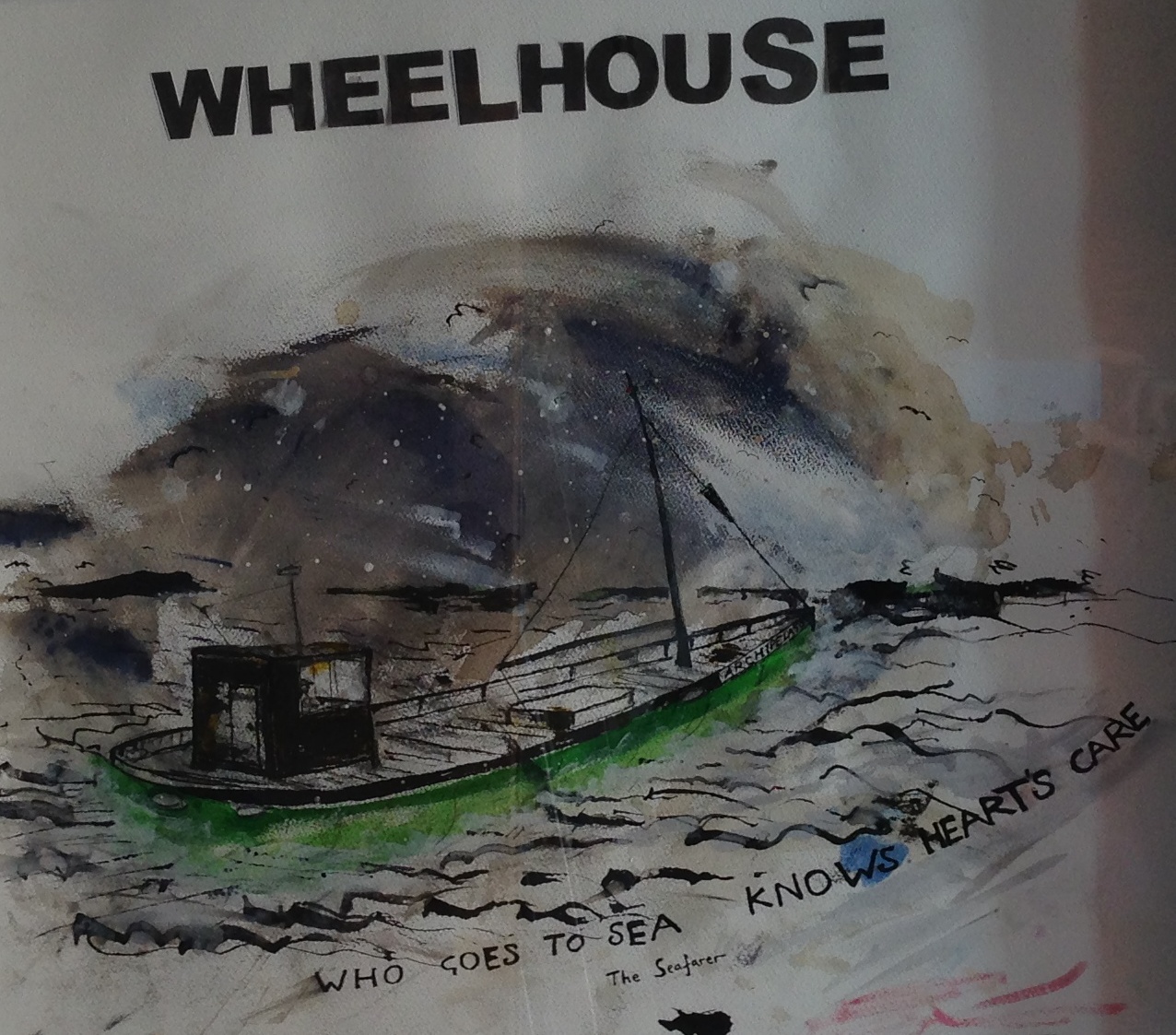
‘From the Wheelhouse . . .’


Who goes to sea   knows heart’s care.
Groves blossom   burghs grow fair
meadows beautiful.   World quickens.
All things urge   spirit to embark
fare far   by flood-ways
though melancholy call   of summer’s lord
the cuckoo bode   bitter heart-sorrow.

 from ‘In the Wake of the Seafarer’ Winter Moorings (2014)

 
Welcome to the wheelhouse!

The big news: Archipelago has acquired a second fishing boat, a single rig prawn trawler we’re in the process of converting into a back-up floating editorial office: ARCHIPELAGO II. See the picture ‘Northwest Passage’ below: Skipper Macdonald Lockhart at the wheel, Katherine Rundell in charge of tightropes. Both images are by Andrew McNeillie.

The blog that follows on from the ‘Northwest Passage’ image, about a visit to St Kilda, is by George Thomas and by Gordon Campbell. Click play to hear George Thomas soloing with his song of the Solon, first performed in public here.
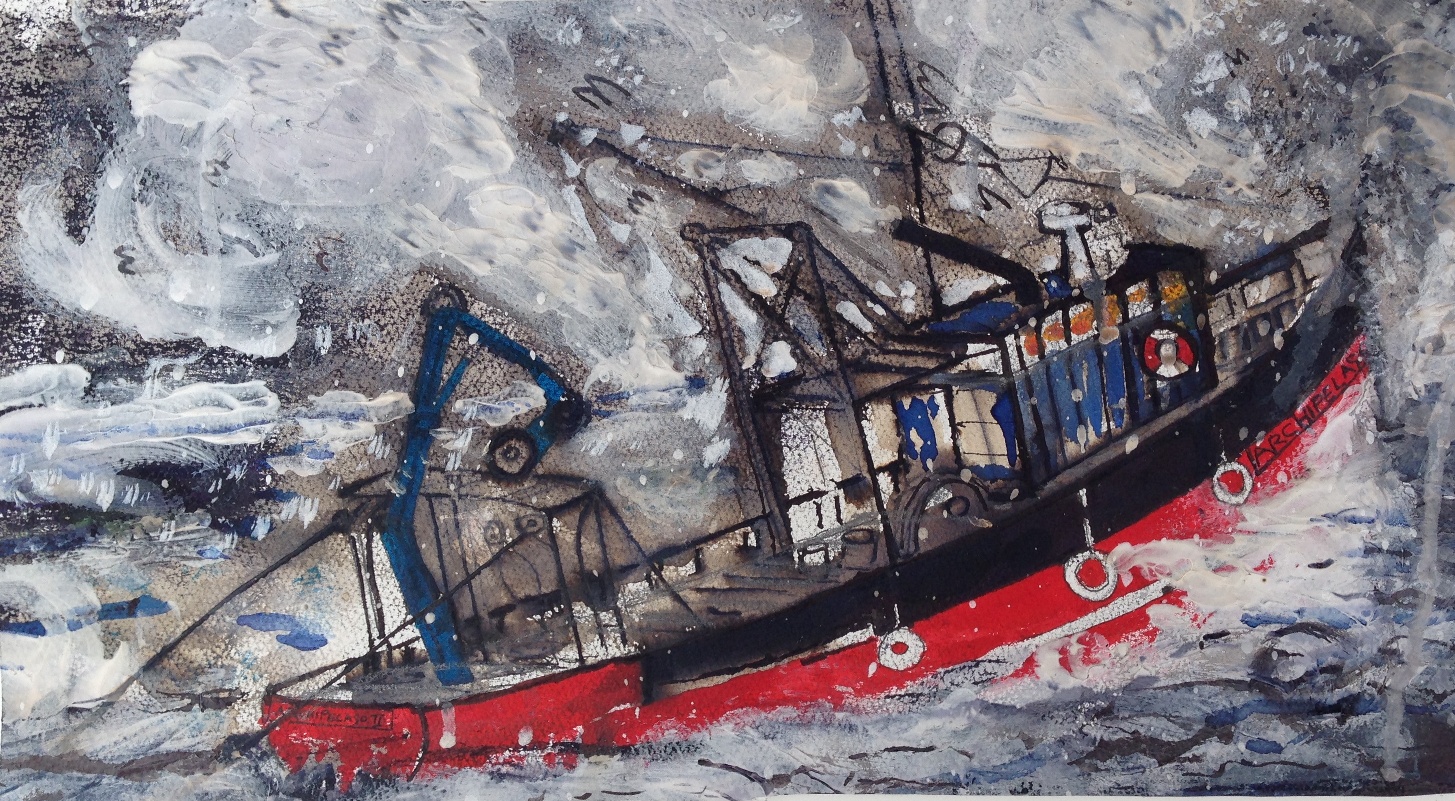
 

ARCHIPELAGO II  Northwest Passage - for blog


A Journey to St Kilda

Why was our journey to St Kilda so moving for me? Setting aside the build-up, the reading, the companionship in endeavour and the disappointment of failing in the first attempt there are a number of lifelong themes that help me explain or, at least, rationalise my pleasure in the journey. G. K. Chesterton considered ‘Over the hills and far away’ to be among the most beautiful lines in English poetry. It evokes a dim landscape beyond the horizon where untold adventures and new experiences await. It also suggests wildness, an atmosphere beyond the realms of civilisation and everyday thinking. I’ve been sensitive to this magic from an early age. As a teenager I loved hitchhiking to other places, walking along roads through new countryside, talking to strangers and just ‘getting by’. St Kilda is a sort of Ultima Thule in this regard.

As a second theme, I’ve always been held in thrall by redundancy in a historical sense and images of human experience that are vivid, passionate and now quite beyond reach. Of course, this is true of history in general but has been emphasised for me in particular ways. As a young boy, I loved football and supported Crewe Alexandra. Researching the history of the side, I discovered that it was formed from a cricket club in 1877. Considering these distant matches, I also became interested in the fate of another northern team, Accrington Stanley. This faraway side has something in common with St Kilda: frustrated hopes and dreams, exhausted passion, an unfeasible way of life and, eventually, abandonment and evacuation.

If Accrington Stanley has made something of a comeback in recent years, as I believe it has, then so also has St Kilda, with its double World Heritage status, military significance and resident groups of volunteers. You can stay in The Street now, although there are no longer gannet guts on the floors. Soay sheep still roam the island, with fleece like dreadlocks.

A third theme in my journey towards St Kilda was a gift subscription to the National Geographic, generously awarded one Christmas by my Great Aunt Eva, a splendid woman who took mustard with every meal, even fish. I loved the arrival of the bright yellow packages all the way from the USA, with their contents of brilliantly exotic photos, colourful map supplements and adverts for Chevrolet Impalas and colour television sets. They set me off on a course of social anthropology and a hunger to explore the far flung places in the world which, sadly, fifty years later I have barely begun to do.

Small communities with their custom and practice are interesting in themselves but so too are their links with neighbours. St Kildans appeared remote, primitive and stupid to many Victorian (and later) visitors but the most perceptive writers emphasise their links with neighbouring Harris and Skye, fifty miles or so across the Atlantic. The network of survival, trade, belief and cultural shift is endlessly fascinating.

The history of St Kilda reminds us of the ever present closeness of tragedy. Here is a retelling in song of a story from Martin Martin, when men were out taking birds from Boreray when their boat, the only one on St Kilda, was lost and they had to wait eight long weeks for rescue.

To return to poetry, there are the names Dun, Hirta, Boreray and Soay; the fact that there is no St Kilda – perhaps the name results from an error of correction as far back as the 16th century. The physical prowess of the vanished men, suspended on ropes of hair, hemp and leather on all but impossible cliffs, risking fall and the stabbing gannet’s bill for eggs and young birds is simply heroic. The cold, cruel sea, the topography of Hirta, one face amphitheatre and the other cliff, and the sheer difficulty of reaching the place makes it a certain goal for me. I hope one day to return for a longer stay.

George Thomas


The same Journey to St Kilda

We began a year ago, tourists pretending to be travellers. The weather was bad, and we sat in a hotel bar in Tairbeart/ Tarbert (Harris), hoping that the seas would calm to the point at which a visit to St Kilda would be viable. In the end, our time ran out, and we retreated, determined to return. A year later, we again assembled in Tairbeart, and this time our determination made our intention feel like a pilgrimage, or even a mission. Our group of seven consisted of three special needs teachers, a PR consultant, an oil executive, a musician and a pedant; our poet, Andrew McNeillie, had been unable to join us on this second attempt, so there could be no companion poem to ‘On Not Sailing to St Kilda’, which Andrew included in his Clutag blog ‘Weather Not Permitting’ of 2 June 2013 (scroll down to see).

This was in a sense a very literary voyage, in part because of the scale of writing about St Kilda, which began with Martin Martin’s A Late Voyage to St Kilda (1698) and now amounts to scores of books and hundreds of articles. In recent years there have been wrangles about the historiography of St Kilda, which was long presented as a story of romantic isolation that ended in the inevitable tragedy of evacuation, but it is increasingly seen, thanks in large part to Andrew Fleming’s St Kilda and the Wider World, as an integrated part of the Hebridean communities of the MacLeod fiefdom.

The journey to St Kilda is fraught with uncertainty because of the weather. The climate is hostile, and there are gales for some 75 days a year. We were prepared for a difficult journey, perhaps in the style of Shackleton and his companions crossing in the James Caird from Elephant Island to South Georgia. This was to be an epic journey, one to be enshrined in our memoirs and recounted with ever-increasing exaggeration to our grandchildren. In the event, the sun shone, the sea was as flat as the proverbial millpond, and in place of the James Caird we travelled in Angus Campbell’s turbo-charged catamaran, which had been designed for servicing off-shore wind turbines and so gleamed with high-tech equipment fit to make the boat secure in all weather. We struggled in vain to be uncomfortable.

The emotional effect of our entry into Village Bay was soon abated by the need to lower ourselves into inflatable boats for the thirty-second journey to the shore. The use of these boats is a precaution directed against rats, whose presence on the island could be ruinous to the birds. We walked from the pier to the island’s army base. Civilian contractors (not soldiers) maintain a radar tracking station, and also provide support for the National Trust for Scotland in the form of communications, electricity, water, medical facilities, helicopter transport and winter cover. Gratitude for these services must be balanced against the ugliness of the base’s buildings, one of which (a washhouse) has been plonked directly in front of the historic Factor’s House.

The base contains a canteen and bar known the Puff Inn, but a history of unhappy incidents and the threat of an al-Qaeda attack on St Kilda mean that the Puff Inn is now off-limits to visitors; one cannot be too careful about seasick terrorists in rowboats.

The village is a ghostly reminder of a community that existed, perhaps continuously, for millennia. The National Trust for Scotland has restored six of the Victorian houses – five for accommodation and stores, and one open to the public as a museum – but none of the older blackhouses between the cottages. The Victorian church and adjoining schoolroom have also been restored, and now stand as mute reminders of the attempts of mainland institutions to bring the St Kildans into line with head office thinking. There was of course resistance, and in the eighteenth century the minster had to pay the islanders to borrow the time of their children in order to teach them to read. After all, reading was of little use to those destined to a life centred on the climbing of bird-cliffs.

Looking at the village through the lens of our reading was a strange experience, as what is visible is the top layer of a complex palimpsest. Glimpses of the layer below the Victorian village can be seen in the ruined blackhouses and in the scanty remains of earlier structures, but much of the early history is invisible. Beyond the confines of the village, one can see many of the 1260 cleits scattered all over the islands. These were formerly used for storing dead seabirds, eggs, feathers, crops and peat, and now accommodate Storm and Leach’s petrels.

The urge to climb beyond the village need not be resisted, and so we set off to climb Mullach Sgar. The sense that the walk would resemble Shackleton’s trek across South Georgia was muted by the ease of the climb (much of it on a military road), the warm sunshine and the laughter. As we climbed we saw ravens, hooded crows, wheatears, and pipits, and on the shore we noticed eider ducks and oystercatchers, but the St Kilda wren eluded our gaze, as indeed did the St Kilda field mouse. There were, however, plenty of Soay sheep, a much-studied breed that descends from the feral sheep that once lived on the nearby island of Soay. Their appeal to the imagination lies partly in the link that they provide to the Faroes, where their genetically-linked cousins lived on the island of Litla Dumun until they were all shot in the 1860s.

At the end of our visit, we returned to our catamaran and travelled to the sea-cliffs. There are more than a million seabirds, and we seemed to see most of them. The cliffs swarmed with gannets (the largest of the world’s forty-four colonies), fulmars, guillemots, razorbills, shearwaters, petrels, kittiwakes and great skuas, and there were puffins in the waters below. These sea-cliffs, the highest in the archipelago, are one of the world’s great sights.

We returned to Harris in our comfortable catamaran, cradling tea and then whisky, stopping only to admire a Risso’s dolphin. We had embarked as pilgrims, but returned as day-trippers.

Gordon Campbell


27 July 2014
 

Posted on

‘The beautiful island . . .’

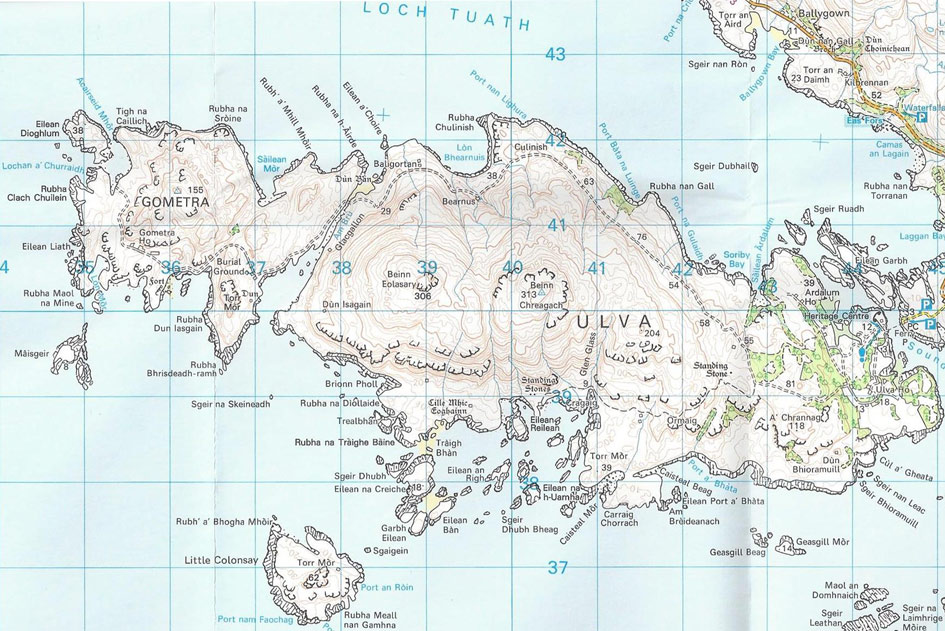
This is to mark the death of Iain Munro, crofter, boatman, and inspiration to all who had the privilege of meeting him. He drowned on the night of Friday 15 May, off the north coast of Ulva, making headway to Gometra, in a small RIB powered by a single outboard. His sole passenger, Andrew McNeillie, by some miracle made it ashore, at Port Bata na Luinge, round the point of Rubha nan Gall, and survived, managing eventually to raise the alarm at Gometra House at about 7.30 a.m. The two had spent the afternoon and evening together on Mull, erecting fencing against deer, and running errands on a dreich day with a mounting southerly wind. There will be a funeral service at Salen on Mull on Tuesday 27 May, and burial on Gometra at what must be one of the smallest graveyards on earth.

 Archipelago has made much metaphorical play with the languages of the sea and of disaster at sea. But no figure of speech can avail at a time like this. John Donne didn’t say ‘no island is an island, entire of itself” though he might as well have done. But he did say ‘any man’s death diminishes me’. Iain Munro was not just ‘any man’. It is the hardest truth that he is no longer alive and working to keep what he called ‘the beautiful island’ of Gometra afloat against all odds. The next issue of the magazine will be dedicated to his memory. It will carry an essay ‘Cause & Way’ about Gometra by its owner Roc Sandford. Andrew McNeillie was travelling out to see the island for himself, to meet Iain Munro, and to discuss the essay, at that point nearly in its final form.

Andrew McNeillie

22 May 2014

Posted on

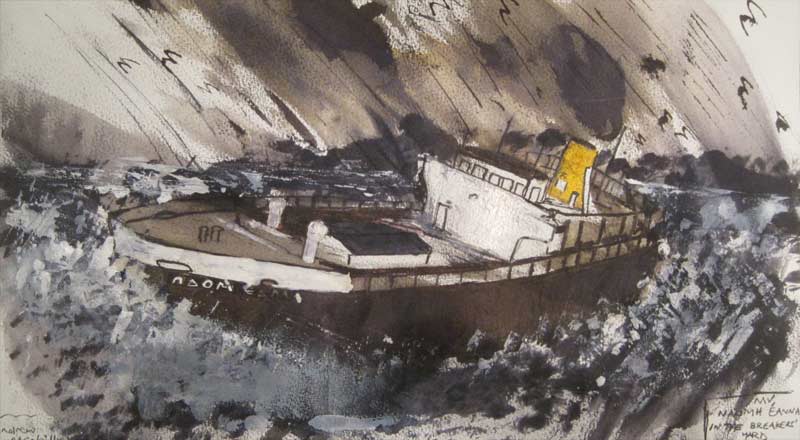
SOS: MV Naomh Éanna

from breakers’ yard to breaker’s yard . . .?


To all who knew the Aran Islands before the Celtic Tiger came and went, leaving such havoc in its wake, the ferry MV Naomh Éanna (1956-86) is an icon in the aesthetics of the voyage and of saner times. When I went out to live on Inis Mór in November 1968 she was not in service but in Dublin for a Board of Trade Survey. I had to go out in a three-hour crossing aboard a trawler from Ros a’ Mhil in Connemara, in a Storm 10.The Naomh Éanna would not have set out in such conditions. (She was top heavy at the best of times.) Once on the island I had no intention of setting foot on the mainland again until my money ran out, which it did by the following autumn. But in that time of considerable hardship I learned to eat my words, and like the majority of the islanders realised why Galway existed. It was so that we might renew ourselves courtesy of the Naomh Éanna. I can think of nothing more stirring than a dawn departure from Galway harbour for a sailing to Cill Rónáin, via ‘the islands’ as they used to say, from the continental vantage point of Inis Mór. But subjectivities apart, the Naomh Éanna‘s story, one with many stories in its hold, is a vital part of the history of the Aran Islands, and one yet to be researched and properly told. The hour is late but it is never too late – and not too late to save her from the breaker’s yard. If you would like to support her cause, visit her via FACEBOOK, and please refer her friends to this Blog at dev.clutagpress.com

I have written about the Naomh Éanna and sung her praises in An Aran Keening (2001) and in two poems in Nevermore (2000), one ‘Prayer to Naomh Éanna‘ : ‘Sailing down the breakers’ yard on the highest winter tide’; and the other, as here:


TO THE  NAOMH ÉANNA:

FOUND RUSTING IN CHARLOTTE QUAY

26 May 2000

Lost among the Dublin quays I found you lost and might not

had I not been lost, by chance, and late about to miss my sailing.

I was your lover once but turned and lost you in the crowd

of stormy seas, and skies too strong for gulls, that day you stood me up

in wild November. They said you’d gone to Dublin then

for a Board of Trade survey. I accepted there were other

men in your life, in every port, and hit the drunken skies by trawler.

But this time, lost in my thirty-year-long labyrinth, and quays,

and old warehousing, and far from thinking of you, I turned and,

suddenly: I saw you, up against the wall. The eye is forever young.

I knew you. For proof I had a camera. But my camera had no film in.

I had to fly or miss my sailing. This was a fleeting fate who else

could share in, now, among the living, and fathom to its end,

and call to mind such sailing we had known, of waves and seabirds

at coming home or leaving: circumlunar, making headway as

making love, on any B or C sailing: home via the islands or

via the islands returning? I knew you, at first sight, unnamed,

through all decay, my sight so young. But we’ve no hope of ever sailing

now, unless aboard a poem like this, at the harbour wall,

already rusting, and both of us too late for it: not sailing, just listing,

in a basin. Dank reflection, off Pearse Street, and all Dublin

sailing past us as we fail, the breeze in your rigging frail

compared with those Atlantic gales, when the islands

heaved at their mooring, and your high prow so proud,

pitched prouder than ever, in the brunt of the weather,

that I cannot quite believe my eyes I ever saw you, then or now.


Andrew McNeillie

19 February 2014

Posted on

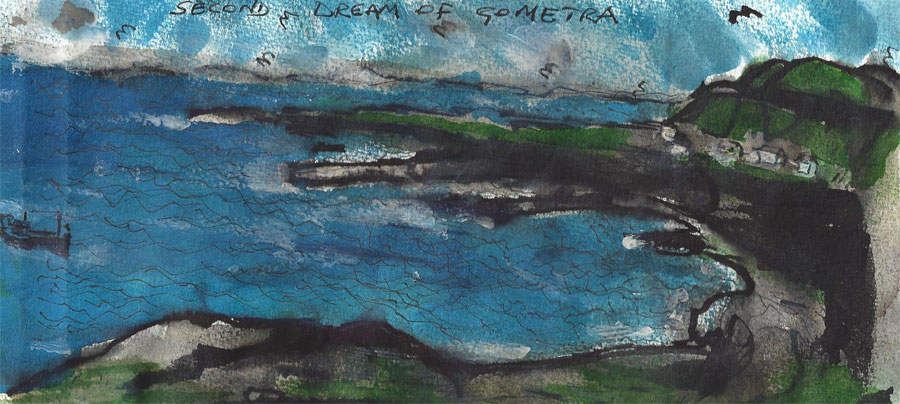
Agog to go to Gometra


My great interest and excitement as this year opens up is to travel to Gometra, an island in the Staffa archipelago, just off Ulva, to the west of Mull. Owned and farmed by Roc Sandford it is one of those rare places off the beaten sea-roads and other tracks holding on to community as tenuously as once, not so long ago, the Erne, now commonly to be seen there, struggled but failed to survive human predation. I shall set out from Oban in late May with my journal and fishing gear, my basic food supplies, my survival kit, my bivvy bag, and all the rest. There is almost nothing on Gometra one could class as a modern convenience, I am pleased to think. With luck I will cross paths with James Macdonald Lockhart as he goes to  add more fieldwork towards the completion of his now nearly-finished book on raptors. And I will coincide with Mr Sandford, who used to farm on Dartmoor, but found it too tame there. He descends from generations of connection with Gometra. A piece by him on the island will appear in Archipelago 9 next winter.


Second-dream-of-Gometra


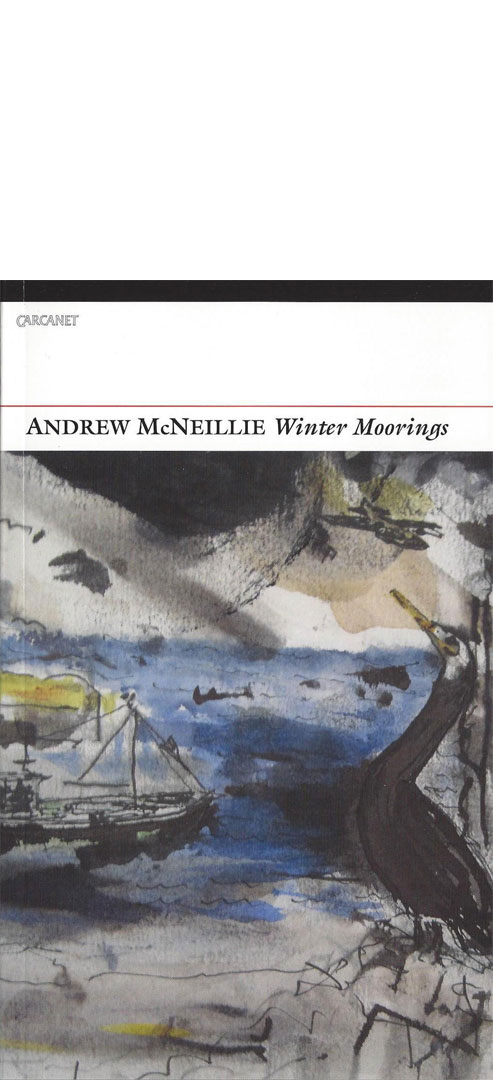
Last year as readers might remember I explored Lewis and Harris. The year before that I travelled to Raasay via Barra, the Uists and Skye. My 304-line poem of that journey ‘By Ferry, Foot, and Fate: A Tour in the Hebrides’ forms part of a new collection, Winter Moorings, published in February by Carcanet.


Winter-Moorings-cover-v2

Here are two extracts, I hope will whet your appetite . . .


Art itself must have begun as nature.

Come in here. Take time. Take shelter.

Wait with only the wren for company

Under the green and dripping canopy.

Stand still. Gaze patiently. Acclimatise.

Absorb the world itself before your eyes.

Feel the weight of history on her knees:

The foursquare ruin, the silver-birch trees

All past child-bearing. And hidden somewhere,

Stock still with timeless stare, the deer.

Not outer but inner turned inside out,

Evicted, cleared into a green thought

As poignant as ever the poet dreamed

Of those girls. But now time the ferry claimed

Me away to the road, where the long climb

To Clachan rose, as if to kingdom come.

. . . . . . . . . . . . . . . . . . .

Meanwhile, my video software installed,

I replay my voyage, my hard disk filled

With the poetry of departure and arrival

To keep me on course and an even keel

As November closes down and winter

Raids in its wake, storming the harbour,

And with its aftermath of winnowed light

Redeems the moment and redeems the heart.

What is this solace we all crave, the loss

That cannot speak its name? No Paradise

On Earth. No Heaven. No Good Society

But that rode roughshod over some body

Of ‘others’ time and truth will bring to light

And in whose cause again stand up and fight.

Yet still we must hold fast and try to keep

Our heads above water – however steep,

However high it climbs, by peak and trough,

To drag us down – we must keep faith

In something like an island community

That knows the spring will come, and the ferry.


And for last word: more power to CAUGHT BY THE RIVER which remains the best independent website for all who read Archipelago.


Posted on

Archipelago Issue 8 on the horizon …

I was in Ireland shortly after Seamus Heaney’s death, in Dublin, then on west to the Aran Islands. Both as seen from the Poolbeg Light on the South Wall at the mouth of the Liffey on a blowy day and rising tide and from a storm-bound Aran, Ireland seemed a smaller place without his presence, somehow empty, empty as a fish-box washed up in the tidemark.


Issue 8 of Archipelago is dedicated to his memory. I’ll not repeat here what I say in its Editorial as to his support for the archipelagic venture. But the issue has for frontispiece a collaborative work by Norman Ackroyd and Seamus Heaney, in which the poem ‘Postscript’ is ghosted over an etching of Inishtearaght.


OLYMPUS DIGITAL CAMERA


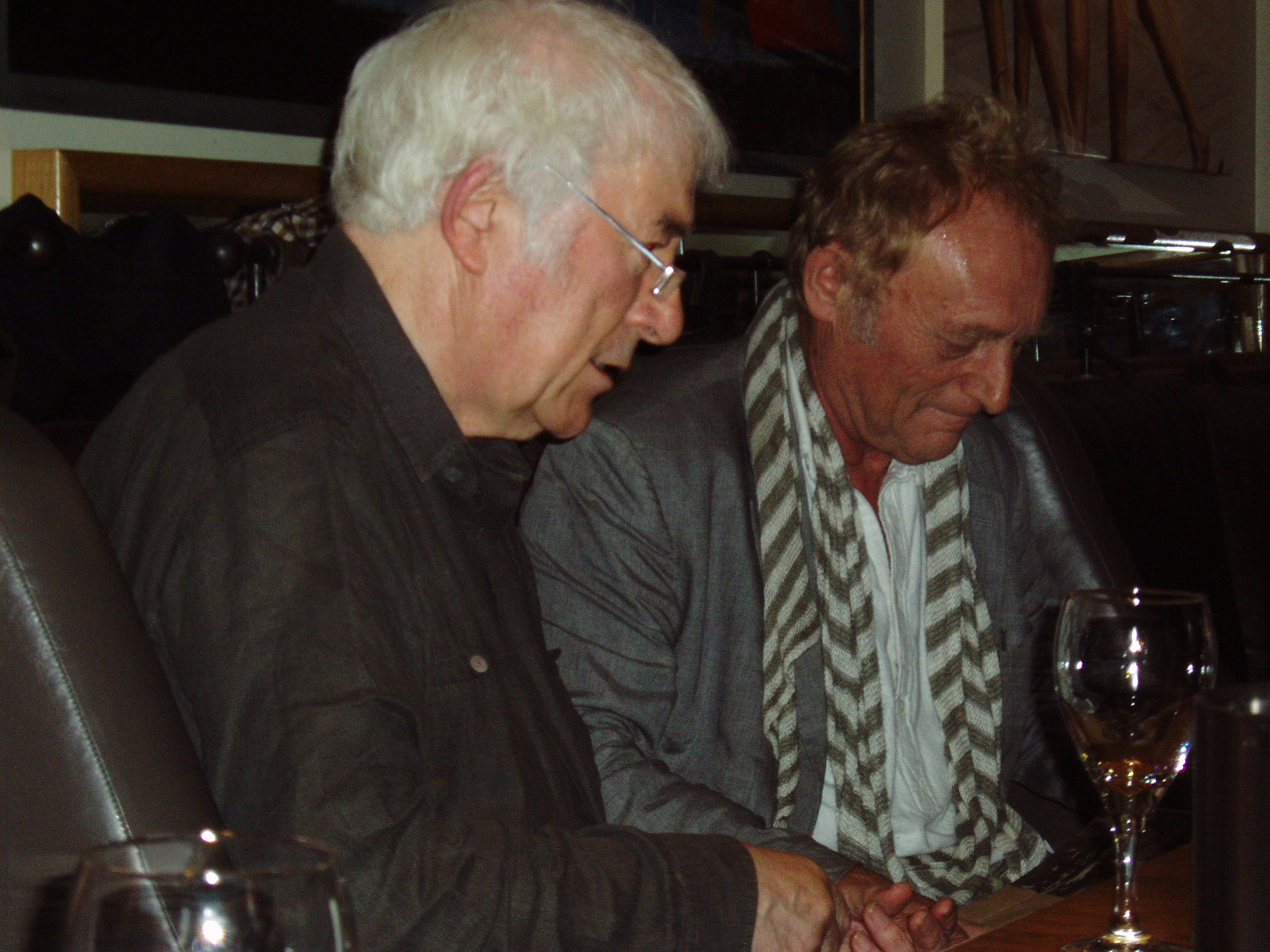
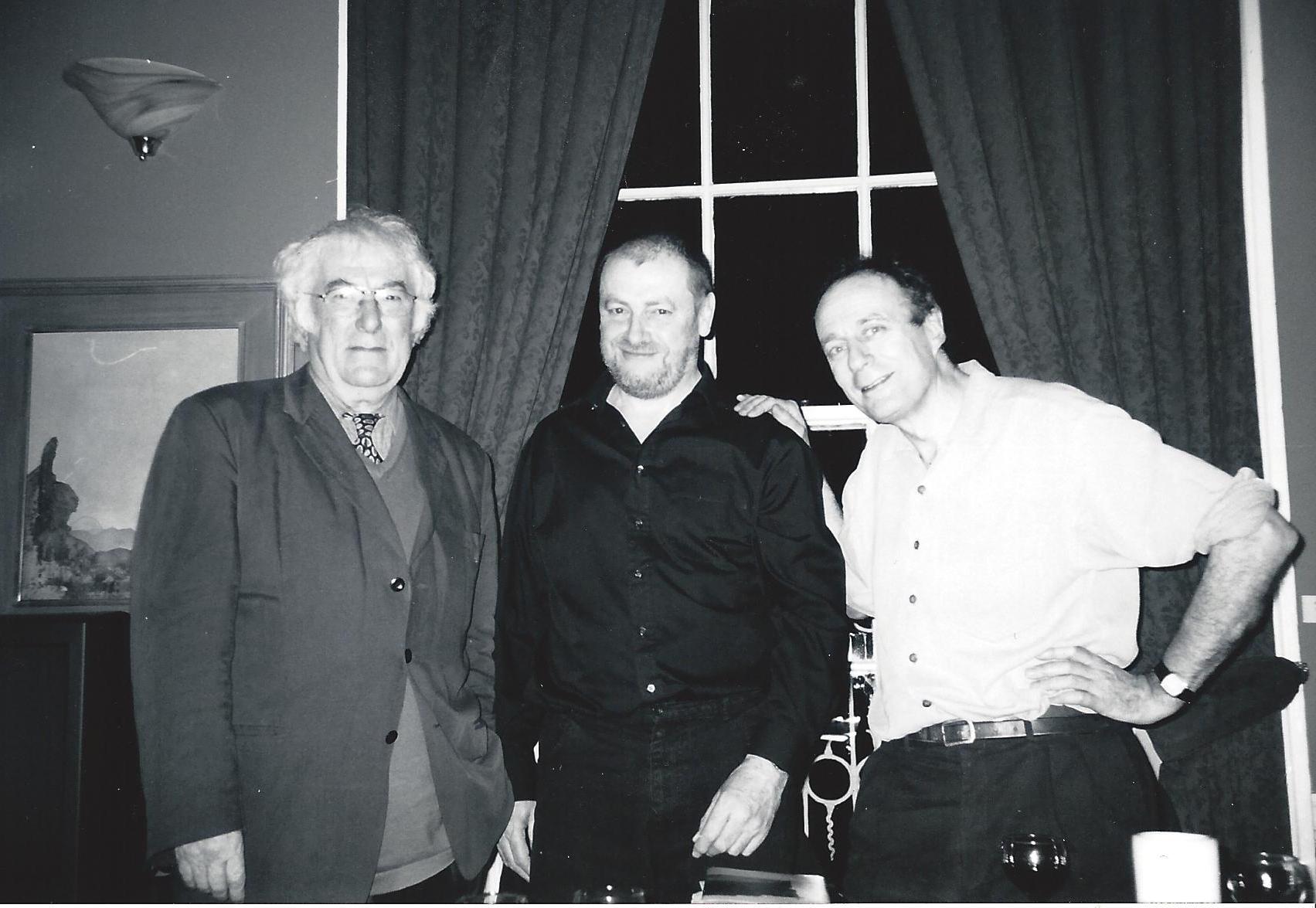
The photograph here of the two men together dates from an Archipelago/Clutag Press event at the Bodleian Library. Also here a snap showing Seamus Heaney and Tom Paulin with the author of An Aran Keening in the Irish Writers’ Centre, in Dublin in 2001.


Heaney blog


Issue 8 of the magazine has been seen on the horizon. It is due to make harbour early in November and in its hold a DVD of Clutag Press’s 10th birthday celebrations, produced by Shaun Bythell and Jessica Fox of PICTO Productions. If you haven’t ordered your copy of issue 8 yet, now’s the time, before the print-run sells out. Among those starring: Norman Ackroyd, Robert Macfarlane, Katherine Rundell, Tom Paulin . . . .


The contributors to the new issue are, in alphabetical order: Norman Ackroyd, Mark Cocker, Rachael Cocker, Alan Counihan, Peter Davidson, Nichola Deane, Tim Dee, David Douglas, Douglas Dunn, Rody Gorman, Kirsty Gunn, Kerrie Hardy, Geoffrey Hill, Angus Macmillan, Andrew McNeillie, Sinéad Morrissey, Bernard O’Donoghue, Alan Riach, Helen Tookey, David Wheatley.


Andrew McNeillie

21 October 2013

Posted on

Weather (not) permitting . . .

'Gannet's Eye View' by Andrew McNeillie


I should have asked my friend the gannet before I set out, for a gannet’s eye view of the chances. But it was not to be and I knew it in my heart. I knew it in my bones as I stepped off the plane in Steornabhagh (21 May), though I took everything I could as a ‘sign’ to the contrary. My plan was to explore Lewis and then go south to join a party of friends (old and soon-to-be) at Tairbeart on Harris in readiness for the word from Angus Campbell to haste ye to Leverbrugh and embark. It was not to be. I knew it literally in my bones next day as I walked in a bitter northerly, lashed by sleet and hail, the two or three kilometres from Port Nis to the Butt of Lewis, the buffets enough to stop you in your tracks. I staggered on into the brunt like a man coming home late from the pub in the old days. I had not seen the Butt before. As I went along I joked to myself as to what it might be to merit the walk on such a day. I thought of a grouse butt for coastguards to peer from through their telescopes. But then I saw my first sign of beneficent providence, a little flock of Snow Buntings doing what they could to hold their own along the cliff-top. Next an Arctic Skua crossed westward at eye-level just in front of me. I had never seen either species before. I pinned my hopes on them and bade those hopes stand fast like the Butt of Lewis Light itself.

The next day, despite high winds and strong bouts of rain, I fished for trout in the only remotely sheltered corner of Loch Acha Mòr and caught four brown trout on a Black Pennell fly, as recommended to me by the man in the fishing shop. It was a fly I had in my box, a stand-by in my native North Wales too. I would have felt safer with three fish, but four would do. I had signs in abundance. All would be well. We would reach St Kilda. Though the cuckoo on the hill and called me a fool countless times.

On the Saturday I drove down early for Tairbeart. A loch on the left of the road took my fancy and I decided to stop and cast a fly at it. It was a bleak day but the water seemed in great condition. I fished without success for an hour and more, by now some distance round the first bay when I heard shouting and, looking up, saw two men, the bigger of them waving his arms, and calling ‘NO FISHING! NO FISHING!’  I hurried round to them having shouted back my apologies. I felt the big man’s hard stare on me as I came along. Then he looked away as we began to make closer eye-contact, as if to maintain his authority. ‘I am sorry,’ I said. ‘I was told …’ ‘What’s your name?’ he demanded. He was indeed a big man. I told him my name. ‘Well, Mr McNeill,’ he replied having misheard, ‘my name is Michael and I am the bailiff here. This is private water.’ Perhaps I wouldn’t make it to St Kilda after all? Perhaps I’d be up before the bench come Monday.  ‘Fishing for trout are you?’ he asked. I said I was. ‘Well this is salmon and sea-trout water, part of the river system, a class B water… Did you catch any?’ He studied my face closely. ‘No,’ I said, ‘no.’ ‘Well, of all the hundred lochs here you picked the only one you’re not allowed to fish,’ he smiled at last, a little. Then the two escorted me back to the road. As we went I told them the purpose of my trip. ‘Were you ever on St Kilda?’ I asked. ‘No,’ said Michael, ‘but my wife was – the worst sea-crossing of her life . . .’  ‘A man I met in Steornabhagh,’ I launched out, ‘told me his father had been there, for a wedding. The minister went out with them on the boat.’  ‘I knew a man was married there six years ago …’ said Michael at once. We both guessed it was possibly the same wedding. ‘Yes, he married, and then he went to Australia. A Lewis man …’ I shook his hand. His silent assistant smiled a quick unofficial smile and Michael wished me a happy holiday. I put away my gear and drove for Tairbeart.

That afternoon I took the narrow winding way to Hushinish, and on the Sunday rose early to go spotting for a golden eagle at Sròn Scourst, along the track to Bogha Glas, by Loch Scourst. There is a hide near the pass there, but I don’t like to be served up ‘Nature’ in that way, and I went off piste and lay among the heather, staring skyward for an hour or so, but nary a sign of a golden eagle. I said to myself, you’ve got as much chance of seeing one as you have of going to St Kilda. Then almost as soon as I had the thought, there the eagle drifted out above the skyline, high above the ridge, not a wing-beat but once or twice a slight closing and opening of the wings, and then away it sailed out of sight over the rocks. An omen indeed. I had first seen a golden eagle as a boy in the OBSERVER BOOK OF BIRDS and never saw one since, beyond the covers of a book or on TV, until that moment. My binoculars brought it nearer but not near enough. Still, what better sign?

Later that day, climbing to the ridge and back down again, as you will see in the poem below, I saw a mountain hare, in two-tone transition, and found a red-deer antler in deep heather. What better signs? But it was not to be. The wind turned southeasterly, the seas cavorted, we would not reach St Kilda on either of our two possible days. On the first possible day my new friends and old (Gordon Campbell and Mary) saw two golden eagles. Surely promising for the next day? But not so. I tried to make out that not sailing to St Kilda was as rich a theme as making landfall there on Hirta. But little by little disappointment prevailed and for me persisted despite the good company I found myself in: and the music and song of John Peppard and of George Thomas; and a retreat to Carol Boyd’s neo-Scottish Laird’s hoose, Crionach, designed by Ian Begg, on the shores of Loch Snizort Beag, on Skye, where the hospitality, haggis and malt kept (some of) us up beyond the early hours into the incoherencies and follies of 4am (the place is up for sale, a snip for £750,000 – what an upmarket hotel it would make).


On Not Sailing to St Kilda

The windows shut against the weather,
I climbed the hill through bog and heather.

I saw a golden eagle and a mountain hare
And found an antler of a deer.

I walked along Hushinish shore
And watched a gannet plunge down ice-cold air.

All in a southeast wind I saw forever
Nothing to my mind that might repair

The dream of sailing to St Kilda
As I had dreamt it months before.


My friends are of less melancholy disposition. They tell me we are already on for May next year . . . weather permitting.


Andrew McNeillie

2 June 2013
 

NOTE:
‘The Raw and the Cooked Collage’ from Spain by Ester Conrat, devotee of Archipelago, for the benefit of those of you ‘in the know’.

Ester Conrat's collage


Posted on

A Late Voyage to St Kilda

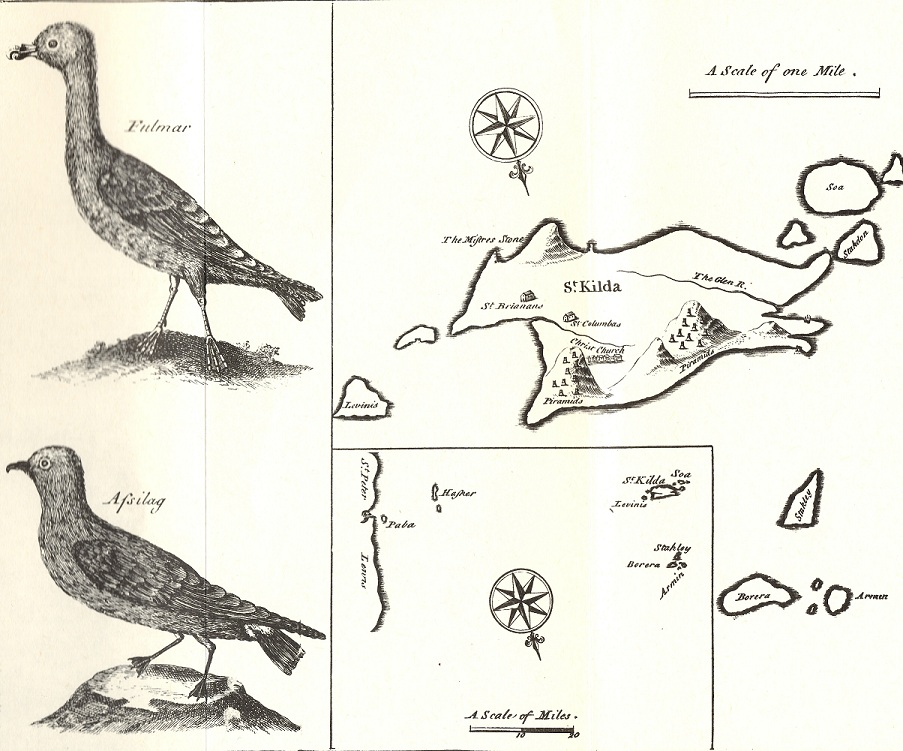
The New Year is already well underway. The long-hand on the clock is stretching towards the light, as a drowning person’s hand might reach for rescue. Spring is beginning to bury its dead. The evenings delay their roosting little-by-little. And when night at last rises up in the shadows and thickens, on come the desk-lamps, out come the maps and charts, and the serious dreaming begins, in the best spirit of Baudelaire’s ‘Le Voyage’. You should not wish your life away. You only have one. But I would throw all the days between now and the end of May overboard, if I could, and put out this moment from Leverburgh, on Harris, for St Kilda. That is my plan, if the two-day window I’ve booked opens on accommodating seas. In some ways to embark for St Kilda is nowadays almost as hackneyed as setting out to climb Everest. But I’ll turn a blind eye to all that and seal myself away into the experience. Before I go I’ll glue into my notebook for handy reference a photocopy of the little map of the St Kildan archipelago from Martin Martin’s A Late Voyage to St Kilda (1698). The earliest map of the islands we have, it’s posted here (with its accompanying quaint drawings of Fulmar and Assilag (Petrel)). Martin sailed in the company of a man called Campbell and so shall I, but not in an open boat ‘to the almost manifest hazard of his life’ (Donald J. Macleod), nor ‘on a mission to pacify the recalcitrant inhabitants of the most remote island in the Hebrides’ (ODNB entry on Martin).

Meanwhile, needs must, and Clutag is busy not only commissioning Archipelago 8 for later this year – having already netted some remarkable work and being almost home and dry – but also making ready at the end of March to publish REVENANTS – Alan Jenkins’s sixth collection of poems; and John Fuller’s sonnet sequence Sketches from the Sierra Tejeda (in a new for Clutag pocket format).

Derailed a little in producing ARCHIPELAGO: THE DOCUMENTARY we have readjusted our timetable and now hope to have the finished product before the year is out or sooner, if possible, to coincide with publication of Archipelago 8.

Advance ordering functions via the website for the new publications will be available shortly. PLEASE NOTE : Clutag Press now has a Facebook page. Tell your friends.

EPSON MFP image

23rd February 2013

Posted on

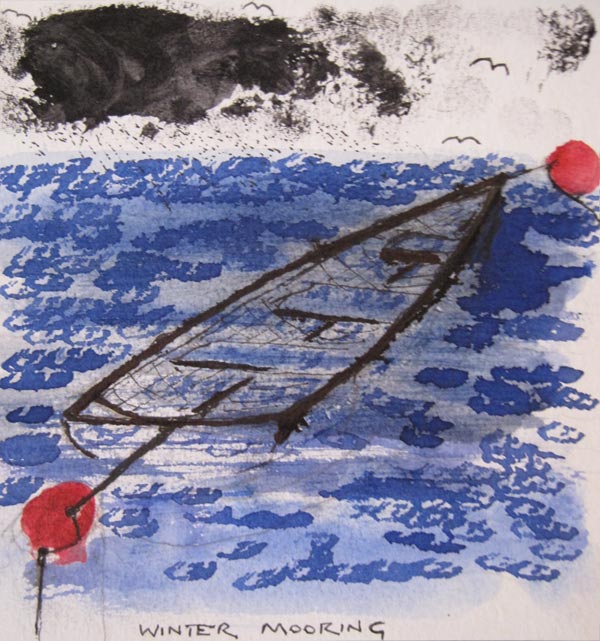
Winter Moorings


Anchored stern and bow, sea-logged to the gunwales:

So I have moored my mind for the winter ahead.

To be the more sea-worthy if all else fails

Come better weather and spring buries its dead.


13th December 2012

Posted on

Depopulated Shores

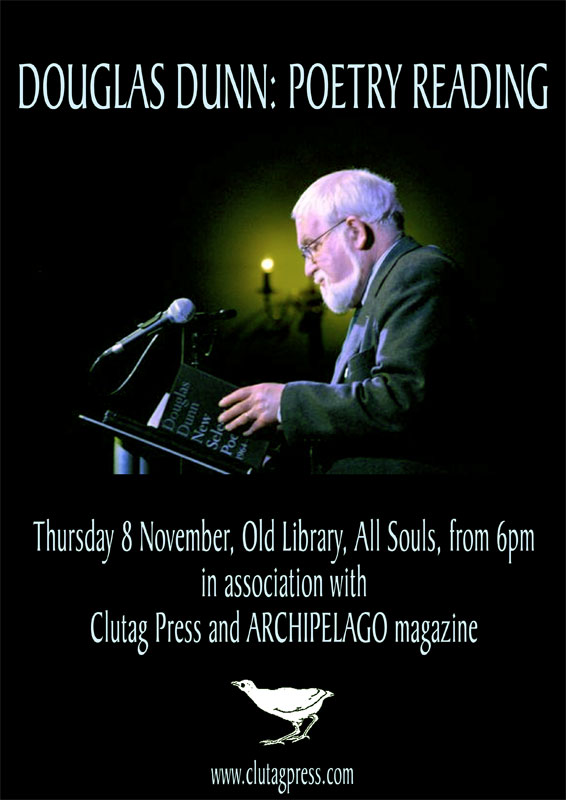
Douglas Dunn (Scotland’s greatest living poet), will be giving a reading at an occasion open to the public in the Old Library, All Souls College, Oxford, on 8 November, from 6pm. All are welcome.

Professor Dunn’s St Kilda’s Parliament (1981) and a long list of his poems about Scotland’s outer limits were an important, long-term inspiration behind the eventual founding of Archipelago in 2007.

Readers will remember that his work first appeared in the second issue of the magazine in the form of a lengthy disquisition – ‘English: A Scottish Essay’ – on the poet’s tongue and its – and his nation’s – relation to the English language. The poem ends, after more than 250 lines, as follows:

One day I’ll feel the confidence to grow

Orchids. But let my lilies flourish in

This land and tongue of rain and cloud-shadow.

Lilies and roses too are of my nation.

Thereafter he has become a mainstay to the Archipelago cause, delighting a readership that like him longs ‘for more chances to walk along depopulated shores’, away from the metropolis, ‘in the provinces, where talent is born’. Most notably, at the same time as he celebrates local and national themes, Professor Dunn knocks the parochial into a cocked hat and scourges the ready and easy way to prejudice. Issue 7 of the magazine will be launched at the same event.

 28th October 2012